


Our penny stocks list focuses on active low-priced stocks showing strong volume, price movement, and market interest. We scan top gainers, premarket movers, news catalysts, relative volume, float, liquidity, and price action to narrow the market down to stocks worth watching.
We post our daily penny stock watchlist inside the Trading Discord. The goal is to have a focused list ready before the trading day gets moving instead of chasing every penny stock that suddenly starts running.
These are stocks to research and monitor, not buy or sell recommendations. A stock making the list does not automatically make it a trade. We still want to see what the chart looks like, where support and resistance are, how much liquidity is available, and whether an actual setup develops.
Penny Stocks to Watch
We’re usually looking for penny stocks that have a reason to be active. That could be a news catalyst, a large premarket move, unusual volume, a low float that is attracting traders, or a stock breaking into levels where we think it is worth paying attention.
We don’t want a huge list. If there are 30 symbols on the screen, it becomes difficult to follow any of them well. We would rather narrow the market down to a handful of stocks with enough volume and liquidity to watch closely and then see what they do after the opening bell.
The current list is posted each trading day inside our Trading Discord. Some of those stocks may develop into good setups. Others may fall apart, lose volume, get too extended, or never give us an entry we like. Getting on the watchlist only means the stock has our attention.
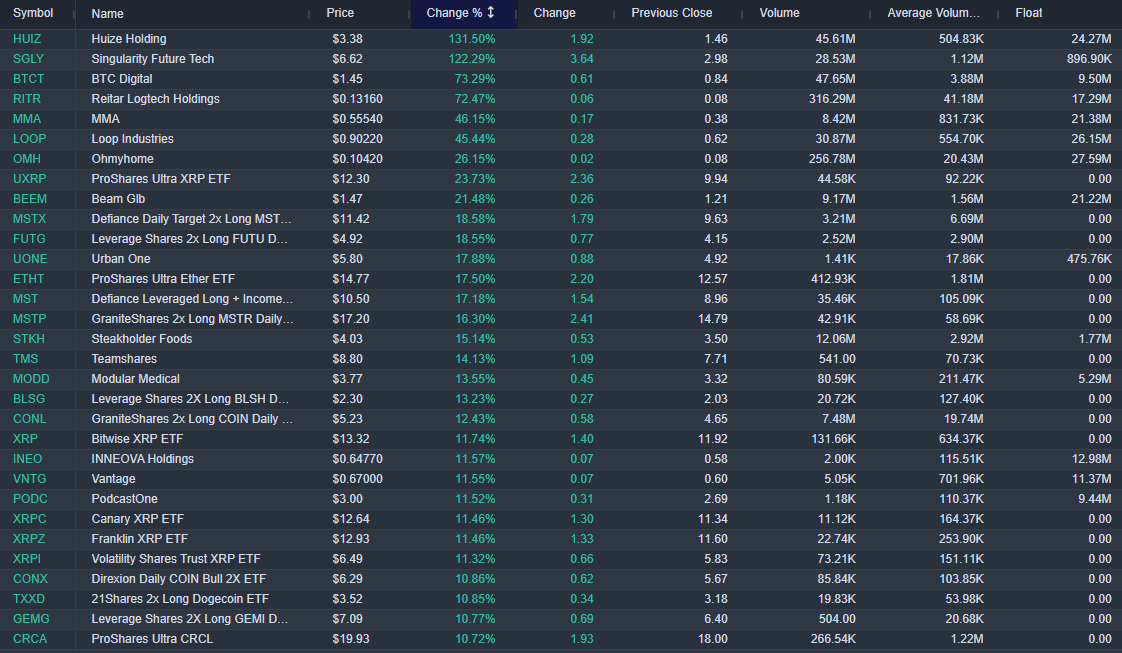
How Penny Stocks Watch Lists Work
We start with stock scanners to find low-priced stocks with unusual activity. Top gainers, premarket movers, relative volume, float, news, and liquidity help us cut down the initial results. From there, we pull up the charts and start eliminating stocks that don’t interest us.
Once we have the smaller list, we map out important support and resistance levels and watch how price behaves around them. After the market opens, volume and price action tell us a lot more. A stock that looked great premarket can lose momentum quickly, while another stock may start setting up much better once regular trading begins.
That’s why our watchlist changes throughout the trading process. It gives us somewhere to start, but we trade what the market actually gives us instead of feeling like we have to trade something just because we put it on the list.
Preparation
Preparation is especially important with penny stocks because they can move fast once volume comes in. Before the market gets active, we want to know the chart, the important levels, the catalyst, the float, and whether there is enough liquidity to trade the stock without getting caught in a terrible spread.
We also want to know what would make us interested and what would make us leave the stock alone. A stock may lose volume, fail at resistance, become too extended, or never develop a clean setup. That happens all the time.
Our live trade rooms show this process in real time. We review what the market is doing and adjust as price develops rather than blindly trading symbols from a morning list.
OTC Stocks
Some penny stocks trade on major exchanges, while others trade over the counter, or OTC. OTC securities do not have the same listing requirements as stocks listed on national exchanges, and some companies may have less publicly available information or much lower trading liquidity.
That can mean wider bid-ask spreads, limited volume, harder fills, and greater exposure to promotional activity or manipulation. Some brokers also restrict trading in certain OTC securities, so check your broker’s current rules before trying to trade them.
We generally prefer stocks with enough volume and liquidity to get in and out efficiently. A stock being cheap does not make it a good trade, and it definitely does not make it low risk.
Penny Stock Pumpers
Penny stocks have always attracted promoters. Today you’ll see them on social media, Discord servers, message boards, newsletters, and just about anywhere traders gather online. Be careful when someone is aggressively pushing a low-priced stock, posting huge price targets, or talking about how much money everyone is going to make without saying much about the risk.
By the time you see hundreds of people promoting the same ticker, some of them may already own shares at much lower prices. You have no idea why another person entered the stock, when they plan to sell, or whether anything they’re telling you is accurate.
Go back to the actual stock. Look at the catalyst, volume, liquidity, float, support and resistance, and price action. Technical analysis can help you evaluate what is happening on the chart, but it still cannot tell you with certainty what happens next.
The same rule applies to trade alerts. An alert can put a stock on your radar, but you still need to understand the setup and make the trading decision yourself.

Charting a Penny Stocks List
Once a penny stock makes our watchlist, we spend more time on the chart. We mark support and resistance, look at the trend, watch volume, and see whether price is actually forming a setup we recognize. This is where a long scanner list starts turning into a much shorter list of stocks we may actually consider trading.
Low-float stocks can move extremely fast when a catalyst brings in volume. That can create opportunities, but it can also produce violent reversals, slippage, bad fills, and stocks that run so quickly there is no reasonable entry left. Sometimes the best decision is simply to let one go.
Penny stocks also don’t provide quality setups every day. We don’t believe in forcing trades just because small caps are normally what you trade. Learning other markets and strategies can give you more options when penny stocks are quiet. Our day trading and options trading guides cover other approaches active traders use.
Bid/Ask Spread
The bid-ask spread matters a lot with penny stocks. If the bid is $2.00 and the ask is $2.10, you are dealing with a 10-cent spread before the trade even gets moving. On a volatile low-priced stock, that can have a big effect on your entry, exit, and risk.
Thinly traded stocks can also jump between prices, making fills worse than expected. Always look at the spread along with volume and liquidity before entering a penny stock, especially if you are trading a larger position.
Liquidity of Penny Stocks
Liquidity tells you how actively a stock is trading and how easily you may be able to buy or sell shares. We pay close attention to it with penny stocks because low liquidity can mean wider spreads, more slippage, and a much harder time getting out when the trade moves against you.
There isn’t one volume number that suddenly makes a penny stock safe or tradeable. Compare the current volume with what the stock normally trades, look at how shares are actually trading, and make sure the liquidity makes sense for your position size. Being able to get into a stock means very little if you can’t get back out at a reasonable price.
Frequently Asked Questions
You can find penny stocks using a stock scanner that filters by price, volume, relative volume, gaps, and other market activity. We narrow the results by reviewing top gainers, news catalysts, liquidity, float, and the chart, then build a smaller watchlist of stocks worth monitoring rather than trying to follow every low-priced stock that moves.
We look for enough volume and liquidity to trade efficiently, a clear reason the stock is moving, and a chart setup we understand. Float, bid-ask spread, support and resistance, relative volume, news catalysts, and overall market conditions can also matter. None of these factors guarantee that a trade will work.
Yes. Penny stocks can be highly volatile and may have lower liquidity, wider bid-ask spreads, limited company information, and greater exposure to promotional activity or manipulation. Their low share price does not make them low risk, so traders should understand the setup, liquidity, and amount they are prepared to lose before entering a position.

